 Field

Tobacco barn art carries more than weathered boards and a sagging tin roof. It carries the smell of cured leaf, the bite of red clay dust, and the memory of a lane that once led home. Across the Carolina Piedmont and the broader South, these barns still stand behind grown-up hedgerows and along two-track roads, though fewer survive every year. A good painting holds onto that country without cleaning it up or turning it into a postcard. It shows the hard use, quiet beauty, and honest age that made the place worth remembering.
If you grew up around tobacco ground, cattle pasture, or an old family farm, you know these buildings were never just scenery. The packhouse held tools, seed sacks, and things nobody wanted to throw away. The barn sat close enough to the field for practical reasons. The house faced the road, while the kitchen garden, smokehouse, and equipment sheds filled the ground behind it. Every piece had a job. That working arrangement is part of what makes a Southern farm scene feel true.
The Barn Was Built for Work, Not Decoration
An old tobacco barn tells you plenty before you step through the door. A log barn chinked with mud may date to the days of wood-fired curing. A block barn with vent doors and a tall metal flue points to a later system. Blackened rafters show years of heat and smoke. Rust around the roof seams tells you where rain finally started winning. None of it was designed to be picturesque. It became that way through use.
Families worked those barns through the hottest part of the year. Tobacco was cropped by hand, hauled out of the field, tied or looped onto sticks, and hung overhead in tiers. Somebody watched the temperature. Somebody kept the fire right. Somebody stayed up when everyone else wanted sleep. Even after bulk barns changed the process, the old curing barn remained a marker of what farming once required.
That history matters in tobacco barn art. Get the building too neat and the story disappears. Straighten every board, brighten the roof, and mow the weeds down to lawn height, and you no longer have a working Carolina farm. You have a stage prop. The better scene leaves the broom sedge high along the ditch. It keeps the cedar growing tight against the corner and lets the lane show two pale wheel tracks with grass in the middle.
Hunters notice those details because we read land the same way. A field edge is not simply a border. It is bedding cover, browse, and a travel line. A grown-up barn lot can hold persimmons, pokeweed, honeysuckle, mice, rabbits, and the predators that follow them. Turkeys scratch where the leaf litter meets open ground. Deer slip behind the structure before stepping into a cut cornfield. What looks like an abandoned farm to one person can look like a complete habitat map to another.
An Old Home Place Reads Like Fresh Sign
Walk an old home place slowly and the ground starts talking. There may be daffodils blooming where the front steps once stood, even though the house has been gone for thirty years. A pair of pecan trees can mark the yard. A shallow depression might be the old well. Rusted fence wire disappears into the trunk of a white oak that was barely wrist-thick when somebody stapled it there.
Those signs hit close for anyone who has hunted family land. You may have climbed into a stand before first light and watched a chimney silhouette take shape through the hardwoods. You may know a property where the farmhouse is gone but the hand-dug pond still holds wood ducks. Maybe your best rut stand sits above an old wagon road because generations of deer still use the same easy grade through the creek bottom.
That is why a southern landscape painting can feel personal even when it shows a farm you have never visited. The details overlap with your own memories. Red clay on the road. Loblolly pines behind the pasture. A hardwood finger dropping toward water. Frost holding in the low ground while the ridge catches the first orange light. These are not broad ideas about the South. They are specific pieces of country you recognize.
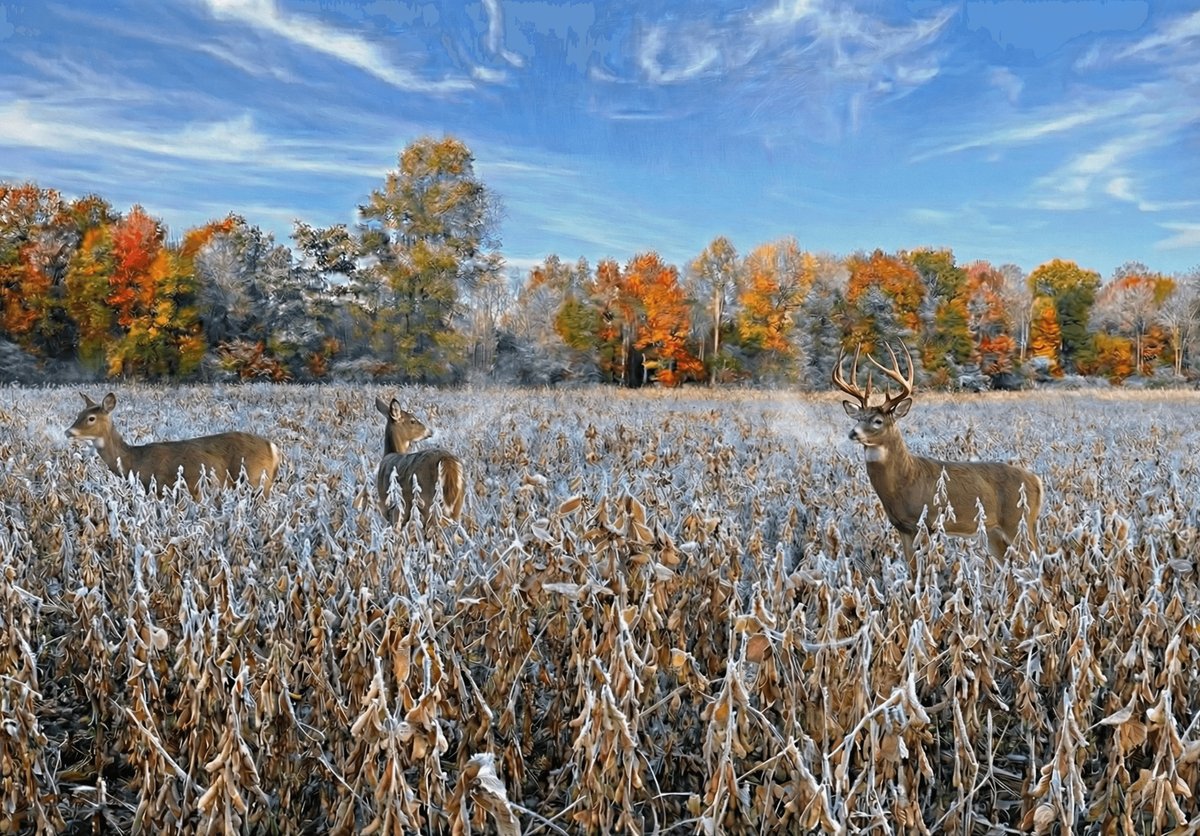
The wildlife belongs in that story, too, but it does not always need to stand front and center. Sometimes the strongest deer scene is a quiet field edge where you expect a buck to appear. Sometimes the best turkey country is suggested by an open oak ridge and a narrow logging road. If you prefer art with the animal clearly present, our whitetail deer prints and wild turkey prints carry that same connection between game and habitat. The land should still make sense around the animal.
Honest Details Make a Southern Landscape Worth Keeping
A strong landscape does not need a dramatic mountain, a perfect sunset, or a sky boiling with storm clouds. Plenty of Southern country earns its keep through quieter details. A pasture gate hanging low. Kudzu held back by winter. A barn roof catching weak January sun. The gray trunks of poplars in a creek drain. That restraint is often what lets a piece live on your wall for years without wearing you out.
Good tobacco barn art also gets the light right. Midday light can flatten an old structure and wash the character out of the boards. Early and late light reveals texture. It catches one side of the barn while leaving the doorway dark. It stretches shadows across the lane and makes the field beyond feel farther away. Hunters know that light well because it is the light we wait for—the first usable glow through the timber or the last few minutes before legal shooting time ends.
Season matters just as much. Summer gives you heavy green growth and a full canopy, but late fall and winter uncover the bones of a place. Once the leaves drop, you can see the stone chimney, fence line, and roll of the terrain. Broom sedge turns copper. Oak leaves settle into the yard. Bare limbs break up the sky. The scene becomes leaner and more truthful.
Our landscape canvas The Old Place leans into that feeling. It is not a polished estate or an imaginary farmhouse with every shutter lined up. It has the worn, settled character of a place that has taken weather for decades. The kind of place you pass on the way to a stand and think about long after the season closes.
The same standard applies across our broader collection of landscape prints. Water should sit in the low ground. Pines should grow like Southern pines rather than decorative Christmas trees. A farm road should follow the easiest route through the land. When those pieces are right, you feel the scene before you stop to study it.
Choose the Piece for the Room You Actually Have
Art works best when it fits the wall instead of fighting it. Before choosing a size, measure the open space and account for nearby trim, lamps, antlers, gun cabinets, and furniture. A canvas hung over a console needs breathing room on both sides. One placed above a mantel should feel anchored to the fireplace rather than floating high near the ceiling.
For a small office wall, reading corner, or grouping of hunting photographs, a 12×8 or 18×12 canvas keeps the scene focused without crowding the room. A 24×16 fits naturally above a desk, low cabinet, or narrow mantel. The 30×20 and 36×24 sizes carry enough presence for a den, lodge room, camp common area, or the long wall behind a sofa. Start with the wall, then choose the size. Guessing usually leads to a canvas that looks smaller once it is hung.
If you are building a gallery wall, keep a common thread among the pieces. That thread might be color, region, season, or subject. An old barn can sit beside a creek-bottom buck, a covey scene, or one of our waterfowl prints if the light and palette work together. You do not need every canvas to show the same animal. You need the whole wall to feel like it came from the same stretch of country.
For farmhouse wall art, avoid overloading the room with manufactured rustic touches. One honest farm scene carries more weight than a wall full of fake distressing, slogans, and decorative tin. Let the image do the work. Weathered wood furniture, leather, iron, and simple textiles support it without turning the room into a themed restaurant.
Frame color and wall color matter, but not in a complicated way. Warm white, tan, muted green, tobacco brown, and deep gray walls handle rural landscapes well. Darker rooms can support a brighter sky or sunlit field. A pale room benefits from stronger shadows and a solid roofline. When in doubt, match the mood rather than chasing an exact color from the furniture.
A museum-quality canvas should show texture and depth without looking shiny or plastic. It should hold detail in the dark doorway and the bright sky at the same time. Viewed from across the room, the composition should read clearly. Up close, you should find smaller things—the split in a fence post, the change in grass along a wheel track, or the soft tree line beyond the barn.
Keep the Place Without Pretending It Never Changed
Preserving a scene does not mean pretending the old days were easy. Tobacco farming wore people down. Families worked in heat that could buckle you. Markets changed. Small farms folded. Buildings went unused because repairing them cost more than they could earn. Any honest view of these places has to carry both pride and hardship.
That tension is one reason old farm scenes matter. They are not simply about wanting to go backward. They remind us how land, labor, and family history fit together. A barn can represent a grandfather who never missed a curing. It can also represent the reason his children chose different work. A vacant house can feel peaceful from the road while holding a complicated story for the people who knew it.
Hunters understand that landscapes never stay fixed. A clear-cut becomes briars, then saplings, then timber. A productive soybean field turns to pasture. A beaver backs water into a creek bottom and changes every travel route nearby. The best stand on the farm can go cold after one logging job. We scout because the land keeps moving, even when the property lines stay the same.
Art gives you a way to hold one season of that change. It keeps a barn upright after the real roof has fallen. It saves the view down a farm lane before subdivisions reach it. It records the low winter sun on a field edge that may grow into pines. That is not empty nostalgia. It is attention paid to a place while it is still here.
When you choose tobacco barn art for your home, camp, or office, choose the scene that feels lived in. Look for believable ground, useful buildings, and light you have actually seen. A good canvas should bring back the quiet after a morning hunt—the truck cooling beside the gate, muddy boots on the floorboard, and the old barn sitting across the field exactly where it has always been.
Questions Hunters Ask About Southern Landscape Canvas Art
What canvas size works best over a mantel or lodge-room sofa?
Measure the mantel or furniture first. As a practical rule, the art should occupy a solid portion of the width without running edge to edge. A 24×16 canvas works over many smaller mantels, while a 30×20 or 36×24 gives a larger fireplace or sofa enough visual weight. Tape the dimensions on the wall with painter's tape before ordering. It takes five minutes and prevents a bad guess.
Will canvas art hold up in a hunting camp with humidity and temperature changes?
Quality canvas handles normal indoor conditions well, but no artwork benefits from direct moisture, hard temperature swings, or long exposure to sunlight. Do not hang it against a damp exterior wall, over a woodstove, or where afternoon sun beats through a window every day. If the camp stays closed for part of the year, keep air moving when possible and address leaks before they reach the wall.
Can a farm landscape hang beside deer mounts and hunting photographs?
Yes. In fact, a landscape often keeps a trophy room from feeling crowded with animals. It gives the eye a place to rest and adds the habitat behind the hunt. Match the general tone of the room, leave space between the canvas and any antlers, and avoid forcing everything into perfect symmetry. A little breathing room makes each piece stronger.
If an old barn, red-clay lane, or quiet home place feels like your kind of country, take a look through the full collection of wildlife and landscape prints. You may find one that belongs in the room where you keep the stories worth telling.