 Field
Field Understanding Summer Whitetail Behavior
Early season deer hunting is all about understanding the summer habits of whitetail deer. During the hotter months, deer follow a consistent routine that can give you the upper hand come fall. Knowing where they've been and what they've been up to as summer winds down can set the stage for success when the air turns crisp.
Whitetails in the Carolina Piedmont spend their summers in the thick cover of creek bottoms and timber lines, often feeding in lush food plots. They're creatures of habit, sticking to established feeding and bedding patterns. As the days shorten, these patterns start to shift, but the intel you gather now is invaluable.
Scouting: The Key to Early Season Success
Scouting is the backbone of early season deer hunting. Spend time in the field in late summer, and you'll learn the ins and outs of a whitetail's world. Look for trails that lead from bedding areas to food sources. Pay attention to the trails' wear and tear; the more worn they are, the more frequently they're used.
Trail cameras are your best friends here. Set them up along these trails or near feeding areas. They can give you real-time insights into deer movement patterns. Adjust your cameras every couple of weeks to keep tabs on shifting behaviors. This data is your roadmap for early season ambushes.
Choosing the Right Stand Locations
Come early fall, your stand locations can make or break your hunt. When setting up, think about prevailing wind directions and the deer's travel routes. Place your stands downwind of these trails, ideally with some natural cover to break up your silhouette.
In the early season, deer aren't yet pressured by hunters. They're moving more freely and often during daylight hours. Use this to your advantage. A well-placed stand near a food plot or watering hole can yield a mature buck when summer patterns still linger.
Timing Your Hunts: When to Strike
The first few weeks of the season are prime time for capitalizing on summer whitetail behavior. Deer are still in their late summer routine, making them more predictable than during the rut. Focus on hunting during cooler mornings and evenings when deer are most active.
In the South, the early season coincides with the tail end of summer. Deer are often still in bachelor groups, which can be a double-edged sword. While more eyes mean more caution, it also means a chance to pattern multiple bucks using the same area.
Gear Up: What You Need for Early Season
Early season deer hunting requires some specialized gear. Lightweight, breathable clothing is a must. The heat and humidity can be relentless, and staying cool helps you remain focused. Camo patterns that match the still-lush environment are crucial for concealment.
- Trail cameras for scouting
- Lightweight, breathable camo
- Portable treestand or ground blind
- Binoculars for glassing distant fields
- Rangefinder for precise distance measurements
Don't forget scent control. Even in the early season, whitetails are wary. Use scent-eliminating sprays and store your clothes in scent-free bags.
The Role of Weather in Early Season Hunting
Weather plays a crucial role in early season deer hunting. Understanding how different weather patterns affect deer movement can be the difference between an empty freezer and a successful hunt. Cooler temperatures often trigger more movement, especially as deer start preparing for the rut.
Rain can be a game changer. A light drizzle might encourage deer to move, while a heavy downpour could keep them bedded down. Wind direction is another critical factor. Always plan your hunts with the wind in your favor to avoid getting busted by a wary buck's nose.
Decoding Deer Trails and Sign
Interpreting deer sign is an art form that every hunter should master. Tracks, scrapes, and rubs tell a story of the deer's movements and behaviors. Early in the season, look for scrapes and rubs that indicate where bucks are establishing their territory.
Tracks can reveal the size of the deer frequenting an area. Large tracks often point to a mature buck, while smaller, more erratic tracks might belong to does or young bucks. Identifying and understanding these signs helps you anticipate deer behavior, setting up the perfect ambush.
Capturing the Essence of Early Season
There's something special about the early season. The woods are alive, and the anticipation of a new hunting season is palpable. It's a time for soaking in the last of the summer sun and immersing yourself in the natural rhythms of the land.
Our piece 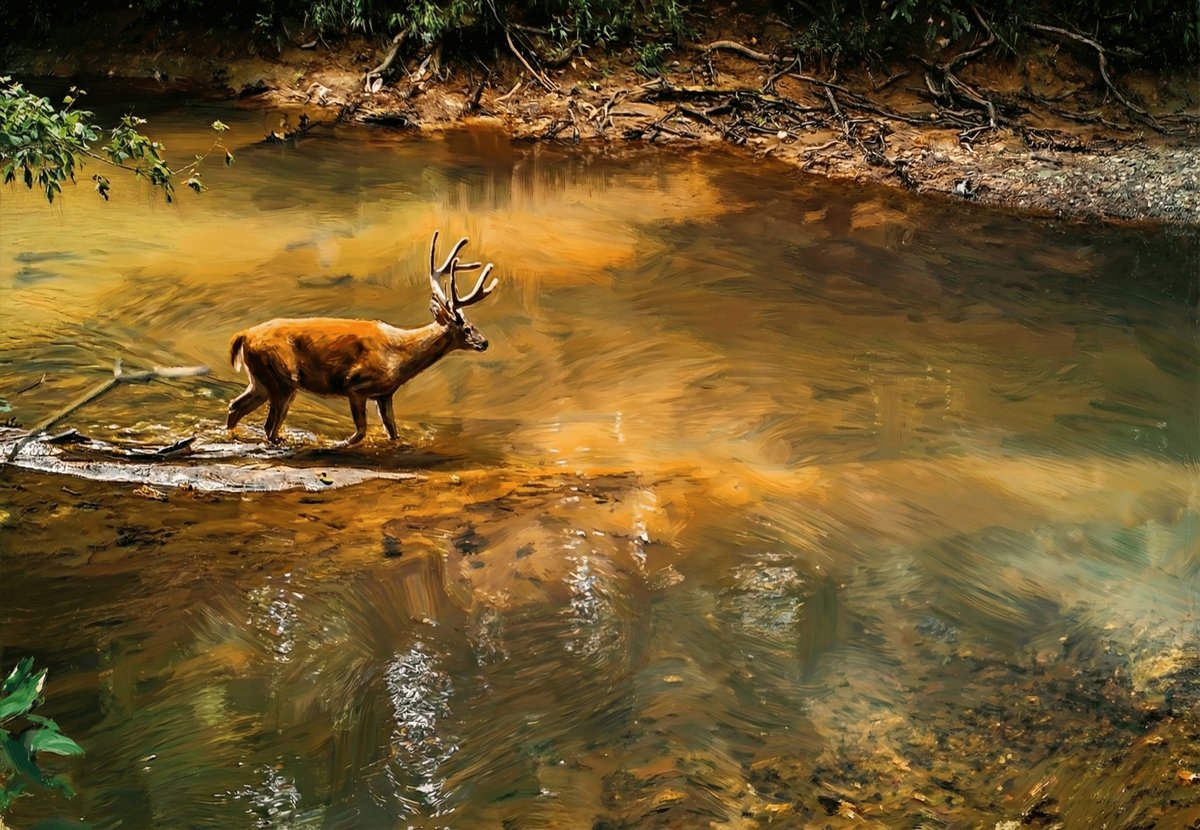 A Summer Dip captures this spirit perfectly. It depicts a moment every hunter knows—a buck taking a refreshing dip in a cool stream, completely unaware of the watchful eyes nearby. It's a reminder of the beauty and tranquility of the early season, an image that resonates with anyone who's ever sat quietly in a stand, waiting for that perfect shot.
FAQ
What are the best food plots for early season deer hunting?
Food plots with clover, soybeans, and alfalfa are excellent choices. They're lush and nutrient-rich, attracting deer during late summer and early fall.
How do you handle warm weather during early season hunts?
Dress in layers, use scent control products, and stay hydrated. Early morning and late evening hunts offer cooler temperatures.
When should you switch stand locations?
If deer patterns change or you've pressured an area, it might be time to move. Adaptability is key to maintaining successful stand locations.
Ready to gear up for your next early season adventure? Explore our full collection of wildlife art and bring the spirit of the hunt into your home. Check out our prints here.